Selection of Aviation Circuit Breakers - Wei Ke Wei - SAE Guide 7-step Selection
Step 1: Select the type of protective device
This is when selecting one of the following types of protective equipment: thermal circuit protection, fuses, arc fault protection devices, or distributed power control units.Each fuse has its own advantages and disadvantages (for example, the fuse has a faster tripping time, but can only be used once at a time), so it is necessary to understand the specific system requirements before choosing.
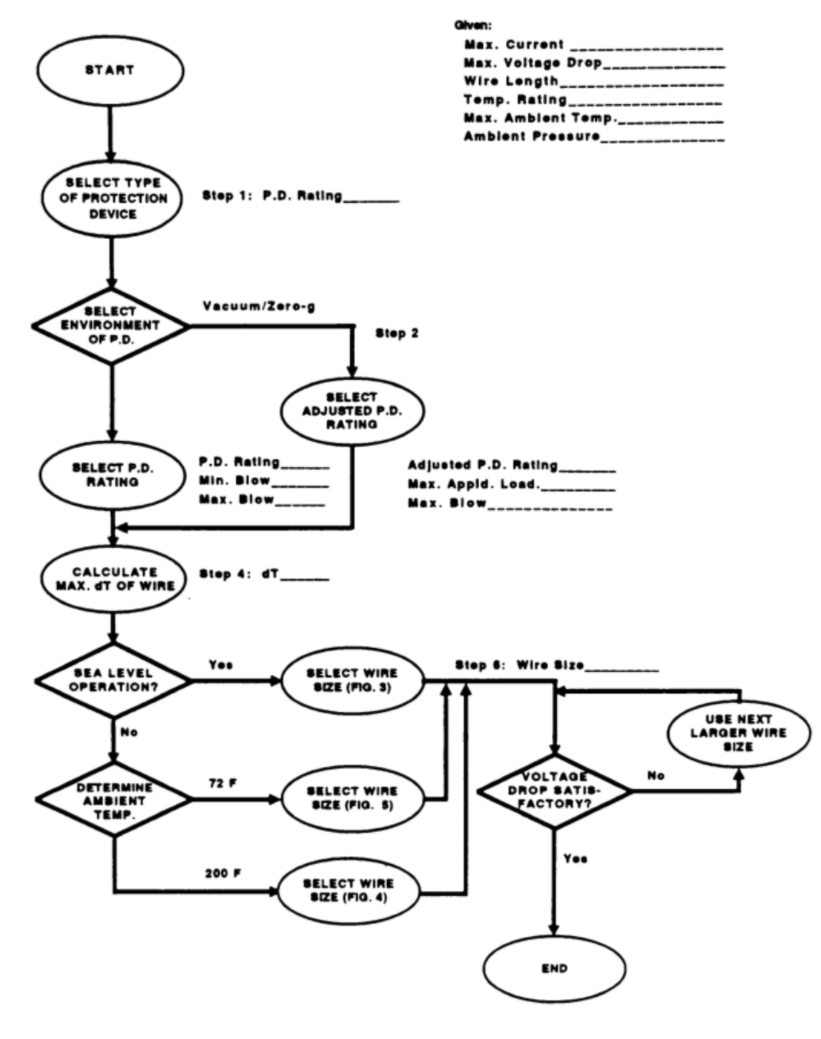
Step 2: Determine the operating environment
For space applications designed with flowcharts, the operating environment also includes considerations of vacuum and zero gravity, as this may affect the separation distance required to disconnect the circuit.For those who have more ground applications, the operating environment remains an important consideration.If the device operates in an uncontrolled environment or is a software controlled system,Then it should be consideredExpose itUnder electromagnetic interference (EMI) or high temperature.
Step 2a: Select device level
Determine the required current for the application without any modification factors.Information from FAA AC 43.13The meaning of circuit breaker and the wire size of the wire system are provided. Please note that this rating information is based on the maximum size circuit protection of the given line gauge. This will provide a starting point for the selection of wire/circuit protection dimensions.
Step 2b: Select the adjusted device level
The adjusted equipment rating is based on the environmental factors determined in step 2.just asAs discussed in EWIS's "LECTROMEC Derating Tool Tutorial"The operating height will affect the given current carrying capacity of the wire harness.
Step 3: Determine the device level to be used
Determine which option requires the widest range of operating environment conditions based on the choice between 2a and 2b;This may be a combination of the two.
Step 4: Calculate the maximum temperature difference/temperature (DT) of the wire
The label is slightly incorrect - it should say the maximum/minimum temperature of the wire/cable.The limiting factors can be insulation or conductors.Regardless of the method, it is important to understand the scope of the system's operation.This step should also include evaluating wire support equipment, such as joints and connectors.
Step 5: Operating environment/Determine ambient temperature
This step can be used in conjunction with step 4, but it includes an evaluation of the ambient operating temperature of the area.The inspection in this area should also cover nearby systems, equipment, and pipelines to determine if there are any heat sources that may affect the temperature of the wires.The results of this step should be applied to determine the current derating (such as AS50881 and EWIS)As described in the "LECTROMEC Derating Tool Tutorial".
Step 6: Voltage Drop Assessment
The isolation from the power bus to the powered device will affect the voltage seen by the final device.Smaller sized wires (such as 24) have a resistance of 2.5 ohms per 100 feet.
In this step, it is recommended to determine the routing separation distance in the system and determine the voltage drop.These suggestions can be found in AS50881.
Step 7: Add line gauges
According to the evaluation results, it may be necessary to increase the line gauge to meet the required voltage drop and current carrying requirements of the system.If a new wire gauge/circuit protection pairing is selected, return to step 2 and repeat the exercise.
This process may seem too complicated, but it is necessary to address the issue of the correct size of the wires and corresponding circuit breakers.Small wires may act as heat sources and/or reduce the functionality of connected devices.Excessive circuit protection may not be able to protect the wire interconnect system and may not respond in many fault situations.
Determine which option requires the widest range of operating environment conditions based on the choice between 2a and 2b; This may be a combination of the two.
The above flowchart is excerpted fromNASA Technical Memorandum 102179-1991.This chart provides a flowchart of design considerations for circuit protection, starting from determining current requirements and ending with system implementation. The following 7 steps will discuss the flowchart in more detail.